HomeNewsSellSocial ResponsibilityContact Us
Subsidiaries
Subsidiaries of Sayna Delijan Complex
Products
Products of Sayna Delijan Complex


Subsidiaries of Sayna Delijan Complex
Products of Sayna Delijan Complex
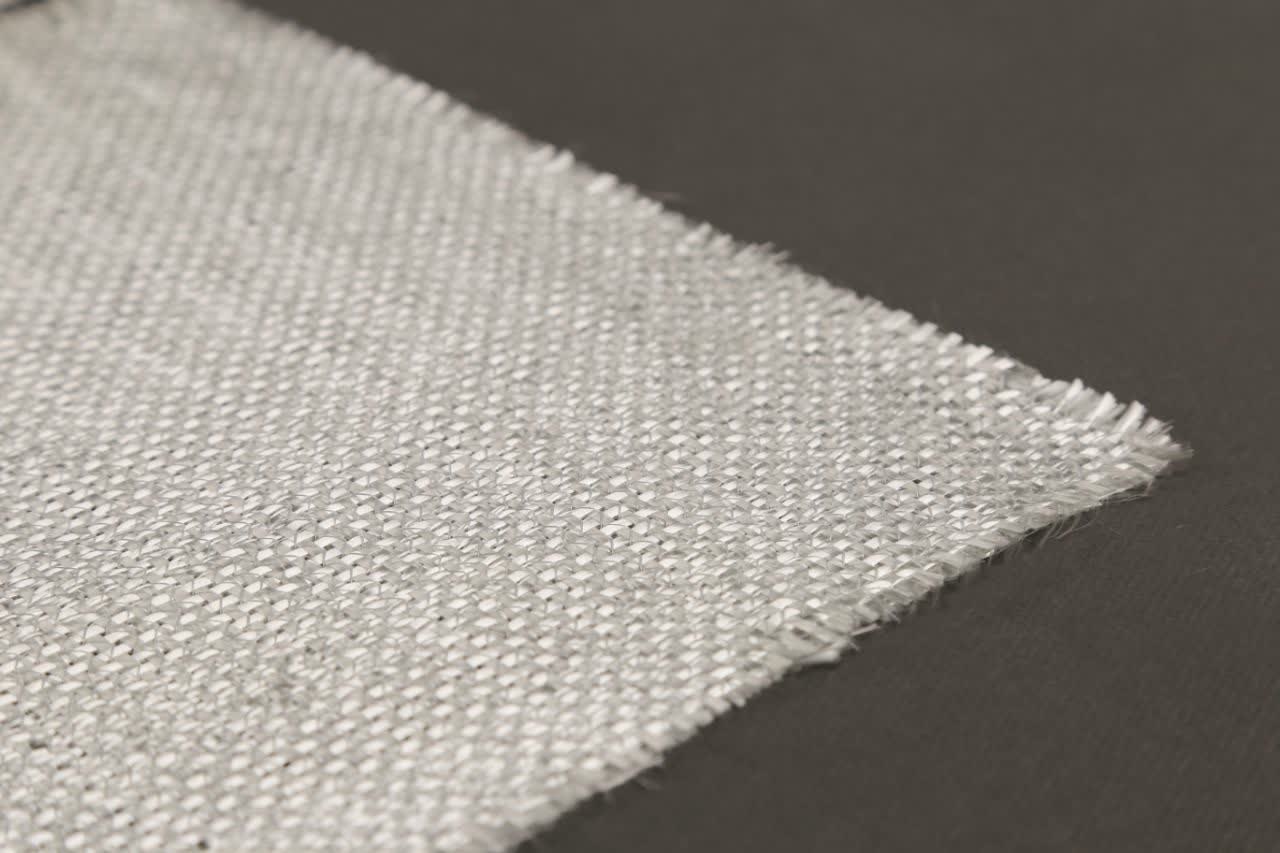
Fiber Glass Woven Roving (Fabric)
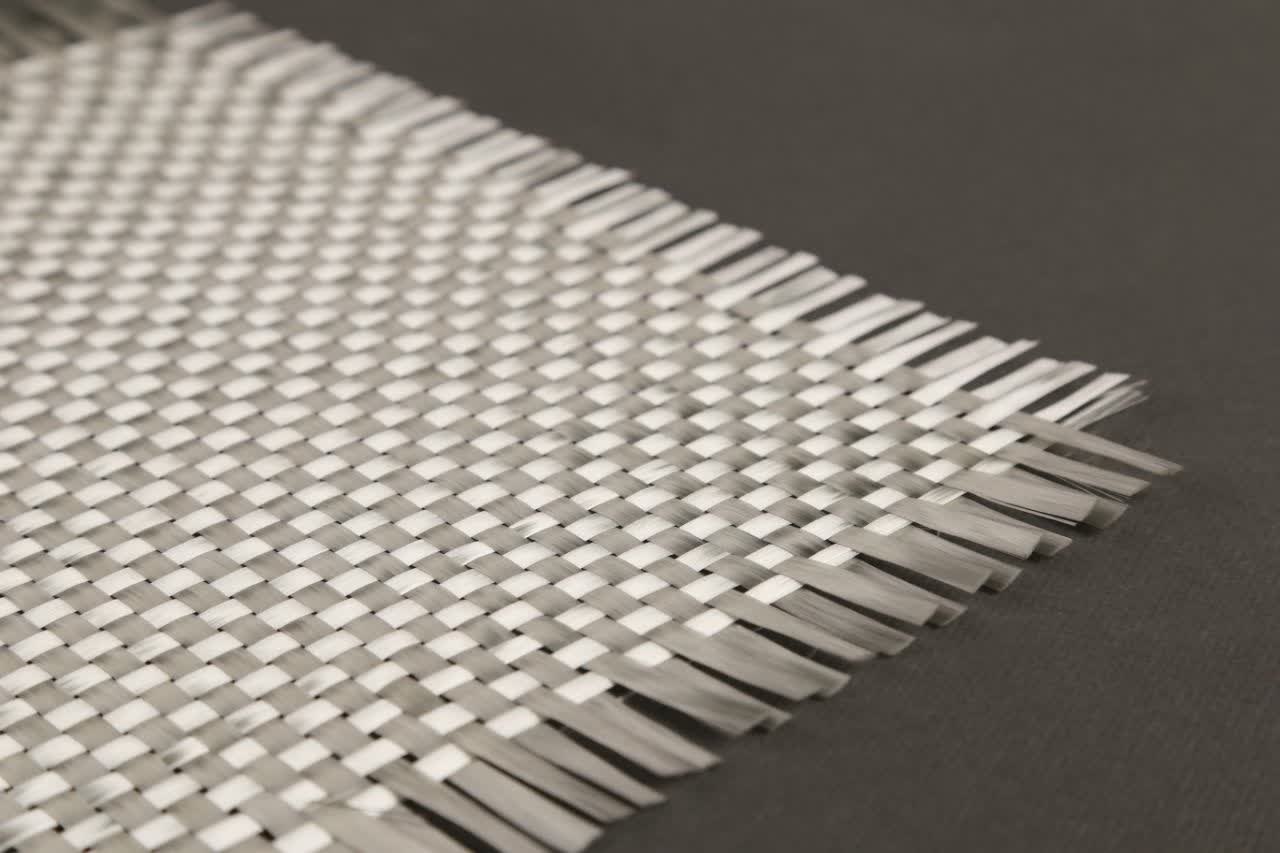
This product consists of continuous glass rovings woven in warp and weft into a fabric-like structure and is one of the most widely used reinforcement materials in polymer composites. Its properties include high strength, greater thickness per layer than fiberglass mat, dimensional stability, and high resin permeability. It is suitable for epoxy, polyester, and vinyl ester resins and is used to manufacture components that require multidirectional mechanical strength.
Woven roving is available in basis weights from 200 to 1,000 g/m² and widths from 10 to 300 cm.
Applications:
Marine and Shipbuilding Industries (the largest user): Woven roving is indispensable to marine applications because boat hulls require exceptional tensile strength to withstand wave impact:
Pipe and Pressure-Vessel Industries (GRP/GRE): In industrial pipe-manufacturing processes, these fibers form the main structure and framework of the body:
Automotive and Rail Body Components: For components that must combine formability with protective and structural functions:
Aerospace and Wind-Turbine Industries: Due to the exceptionally high strength-to-weight ratio:
Technical Specifications:
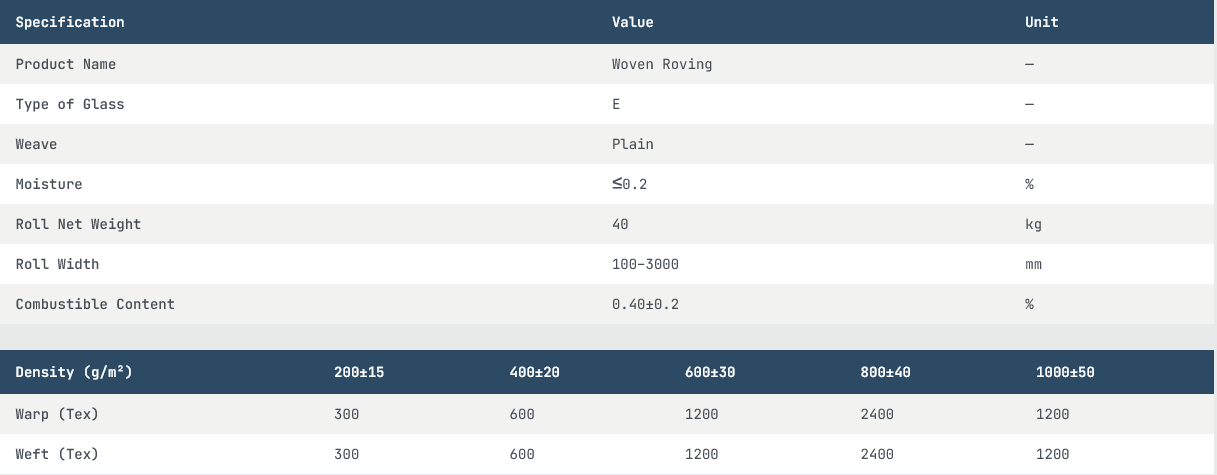
| Specifications | Standard Value | Unit | ||||
| Product Name | Woven Roving | _ | ||||
| Type of Glass | E | _ | ||||
| Weave | Plain | _ | ||||
| Moisture | ≤0.2 | % | ||||
| Roll Net Weight | 40 | kg | ||||
| Roll Width | 100_3000 | mm | ||||
| Combustible Content | 0.40±0.2 | % | ||||
| Density | 200±15 | 400±20 | 600±30 | 800±40 | 1000±50 | g/m2 |
| Warp | 300 | 600 | 1200 | 2400 | 1200 | Tex |
| Weft | 300 | 600 | 1200 | 2400 | 1200 | Tex |
Specifications Fiber Glass Woven Roving (Fabric)
Our Other Products