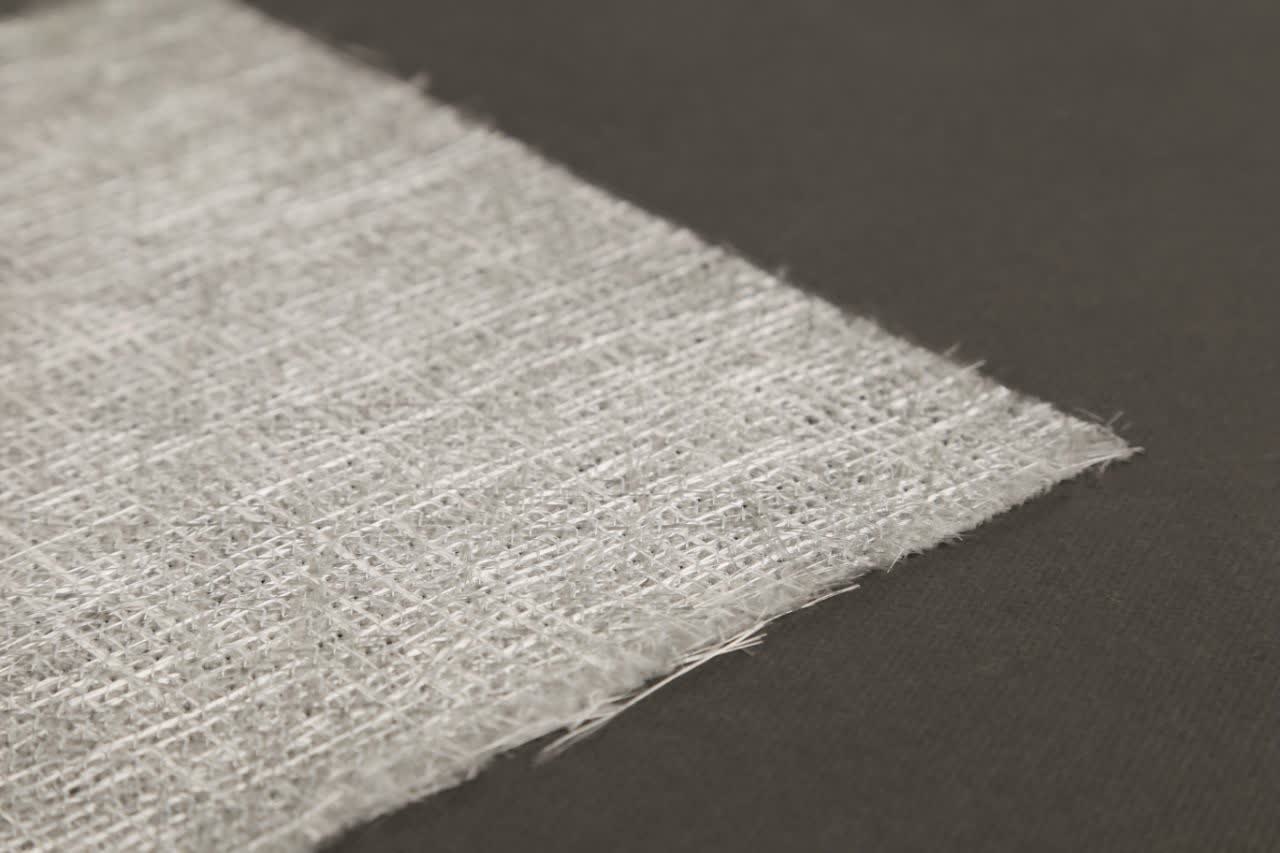
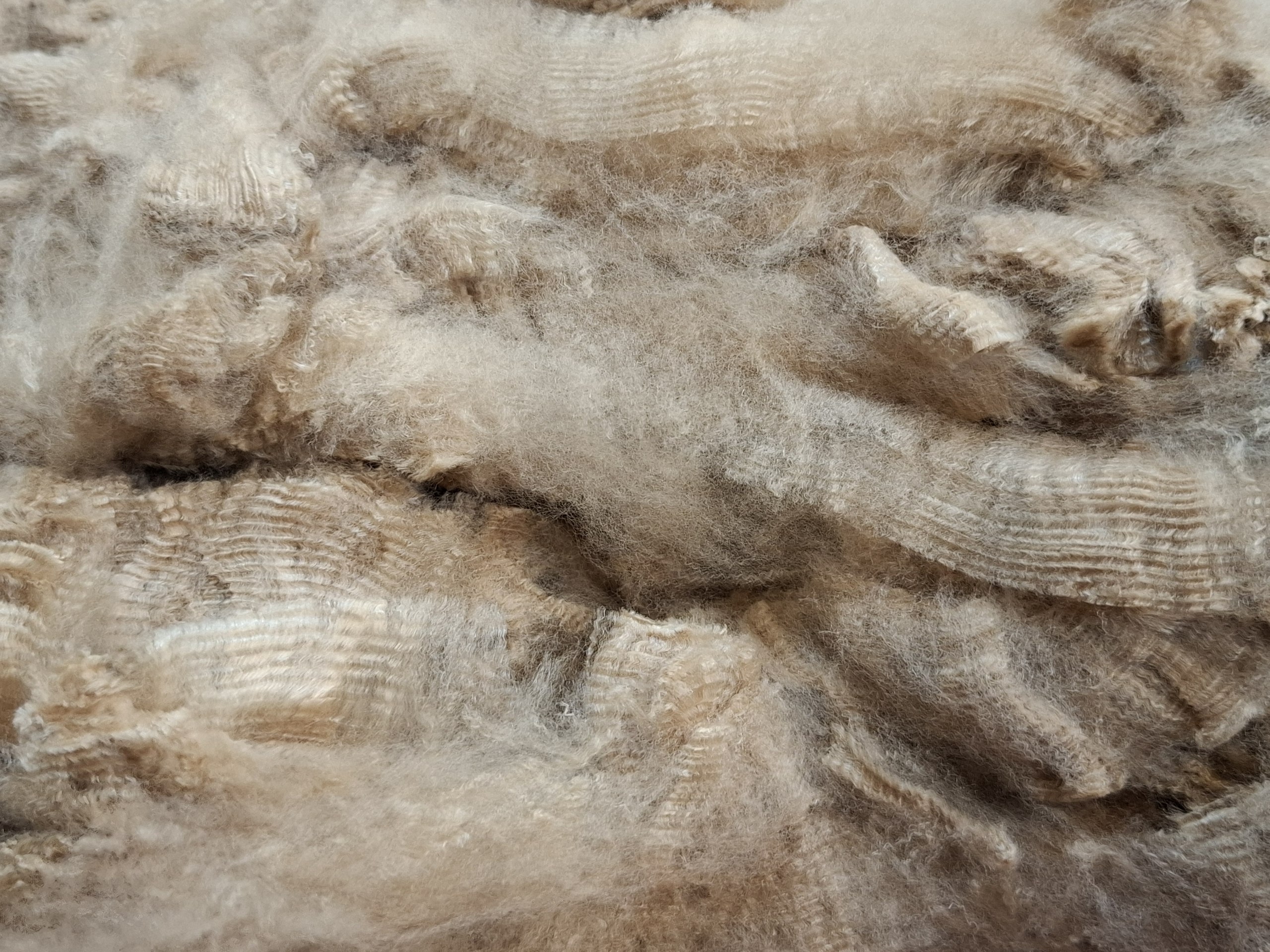
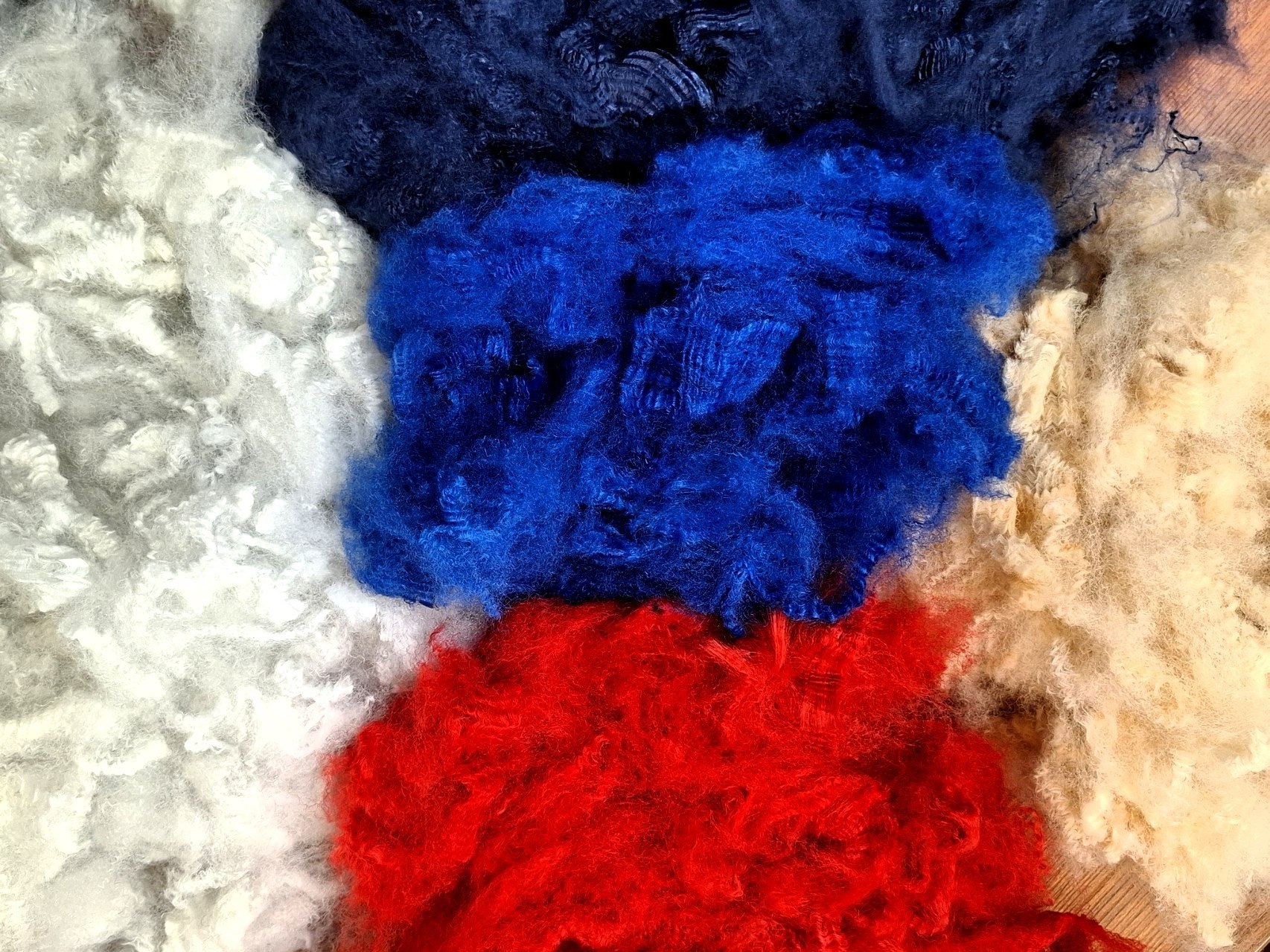
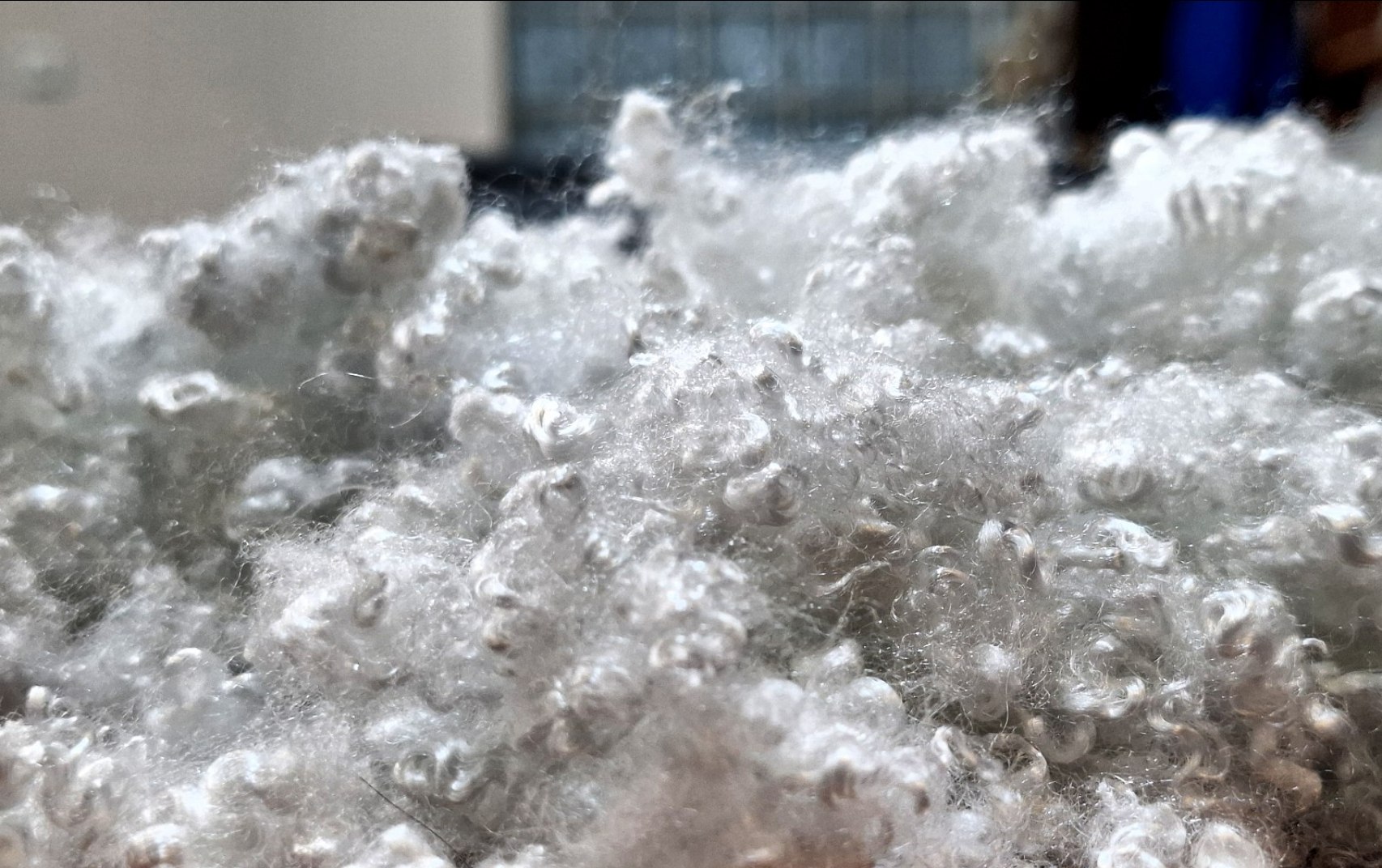
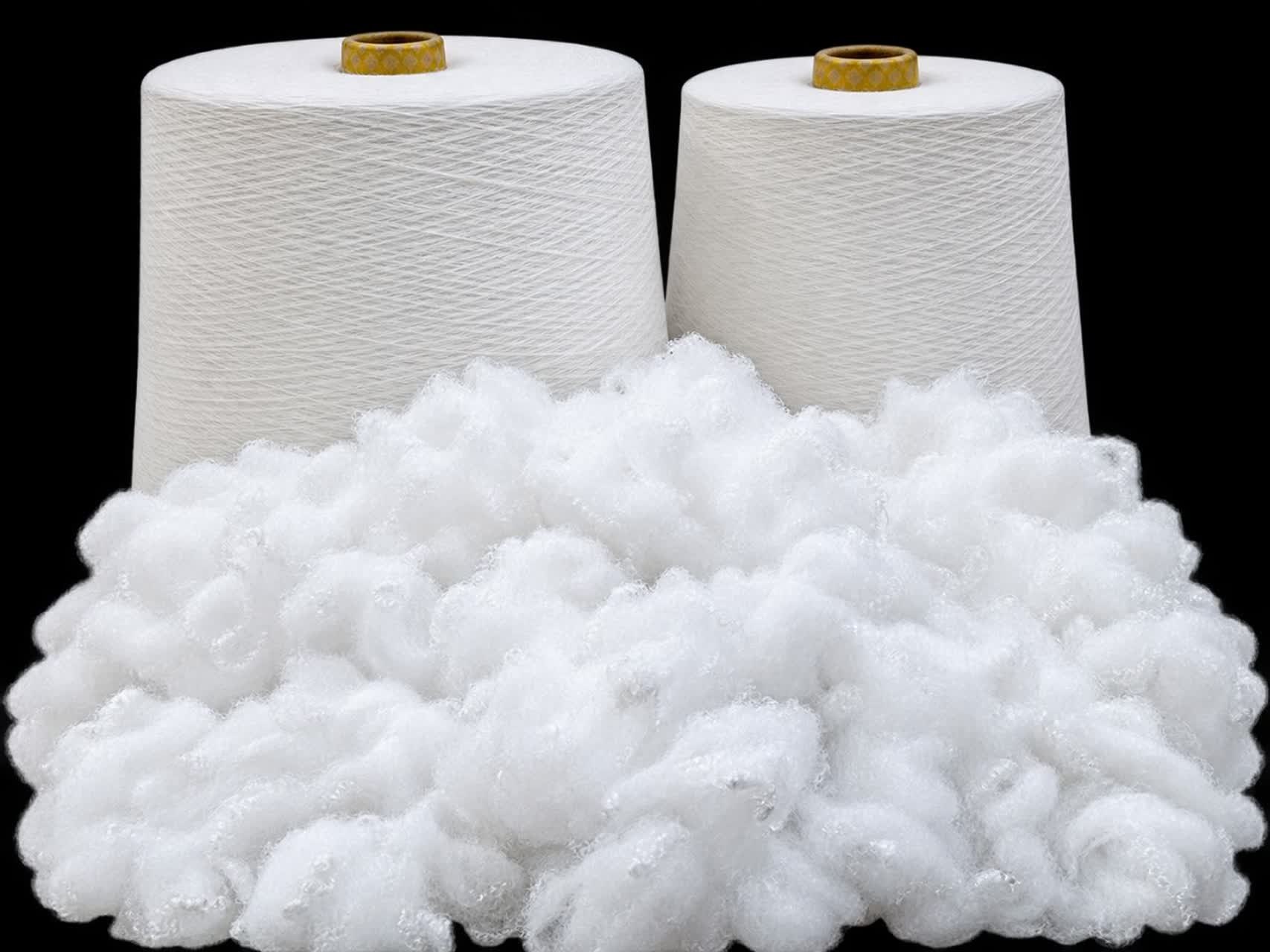
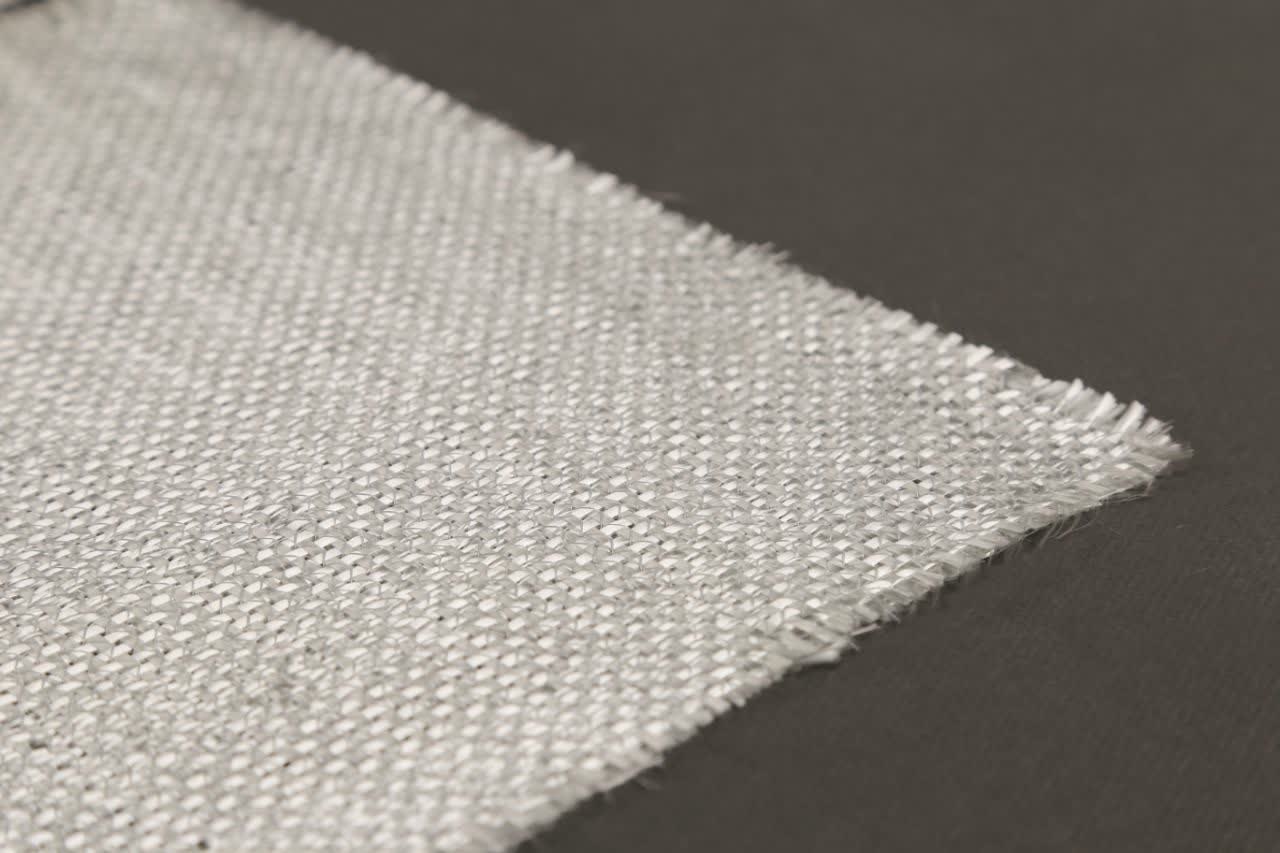
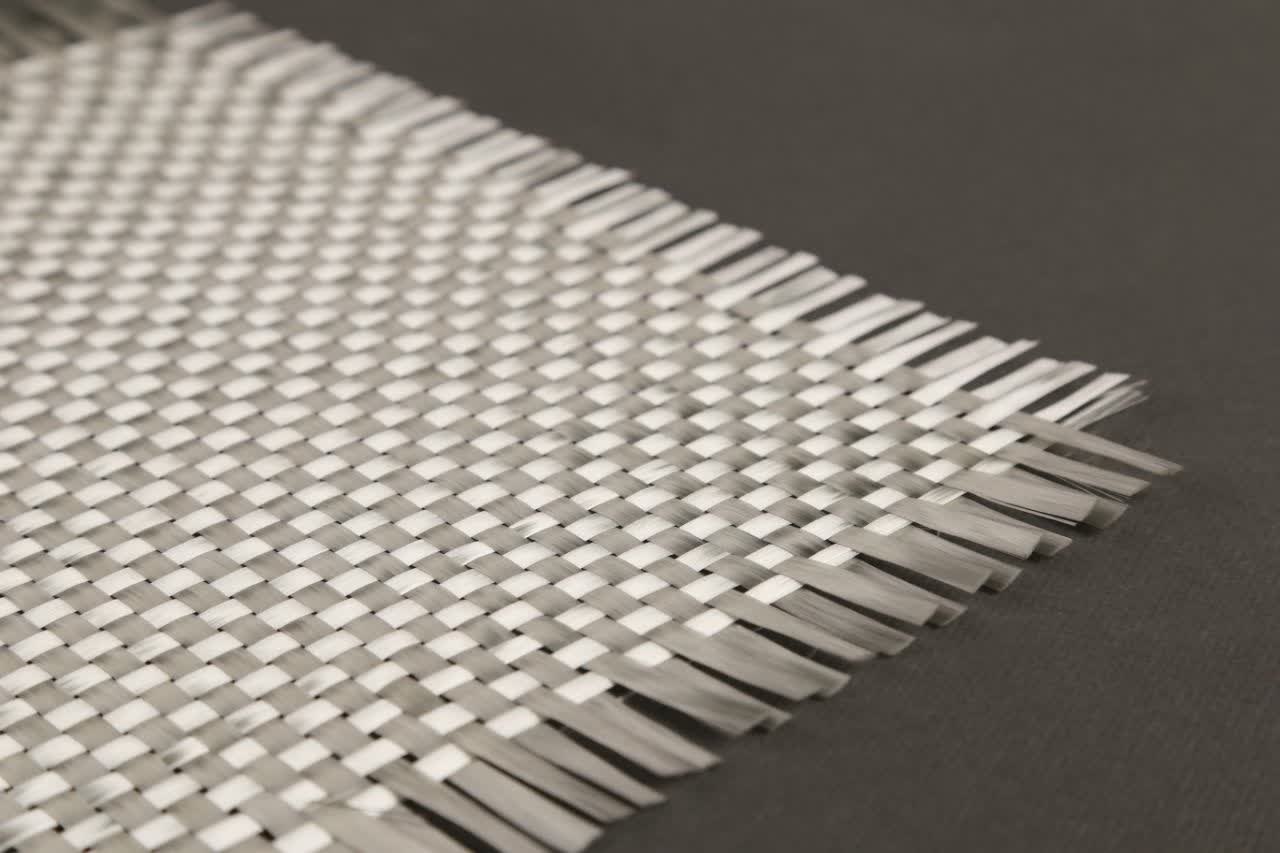
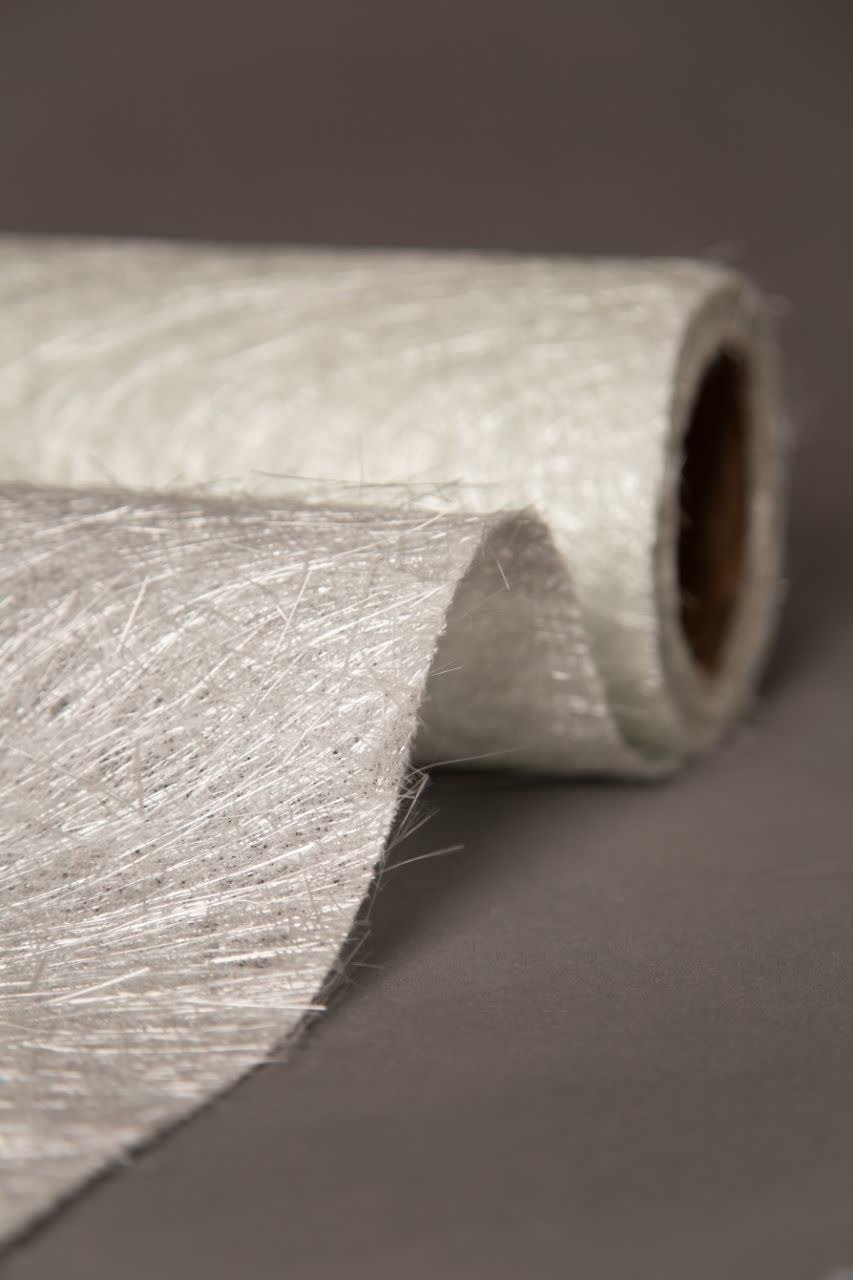
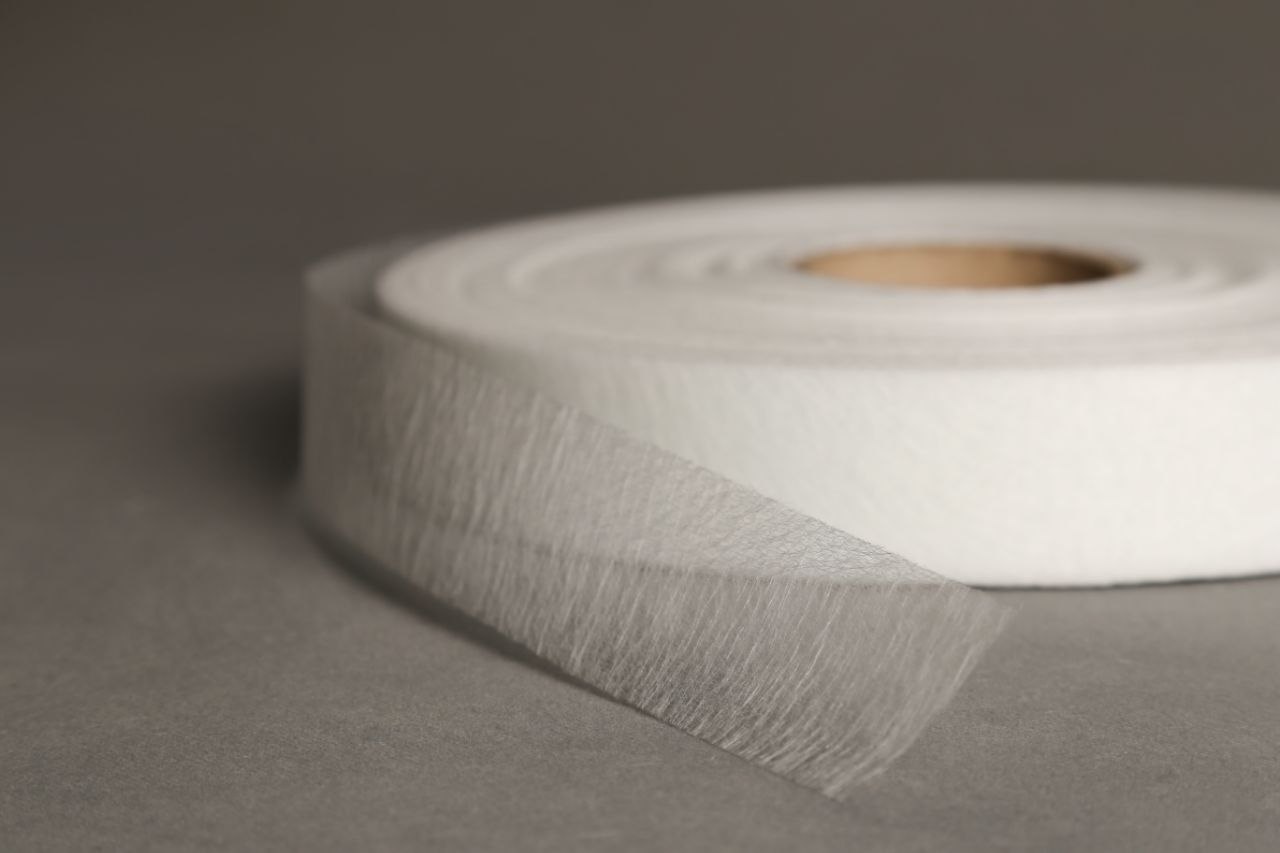
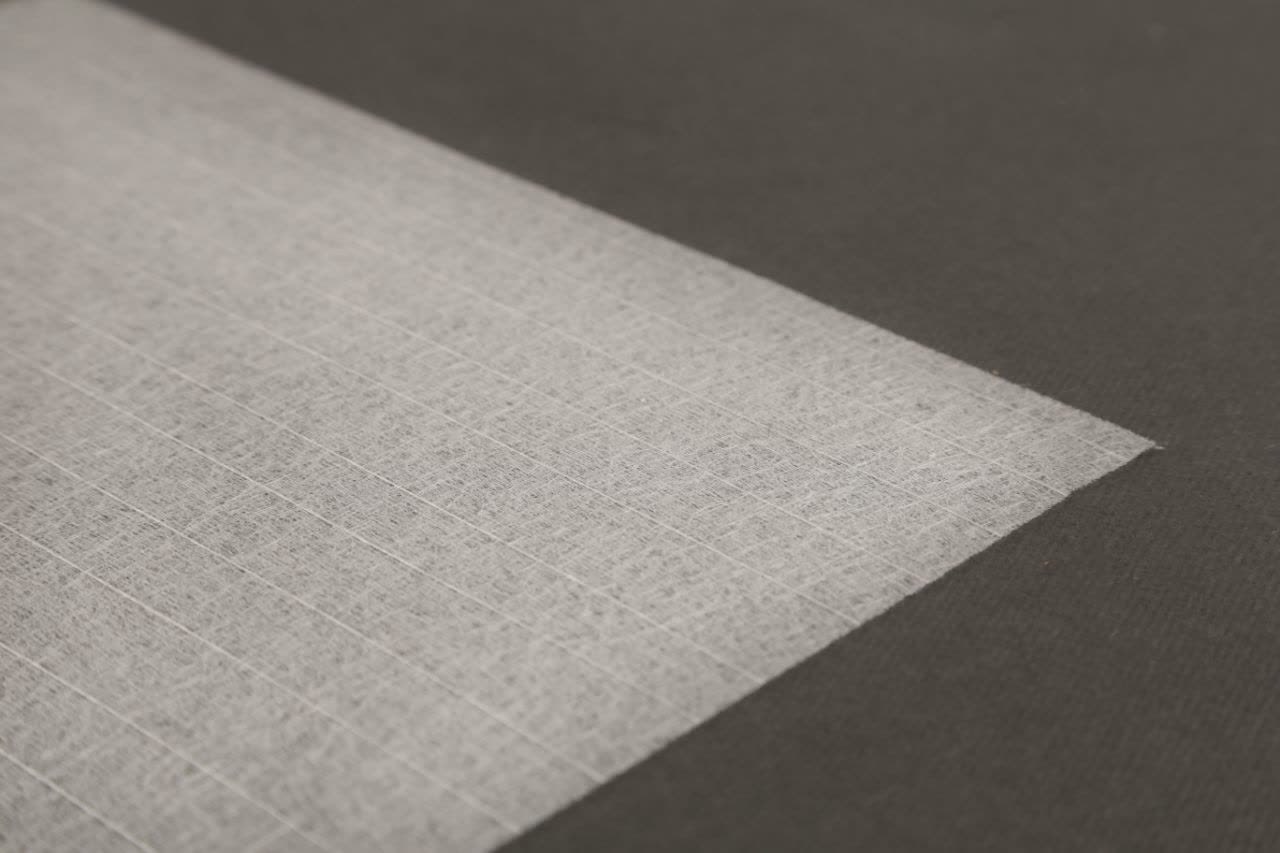
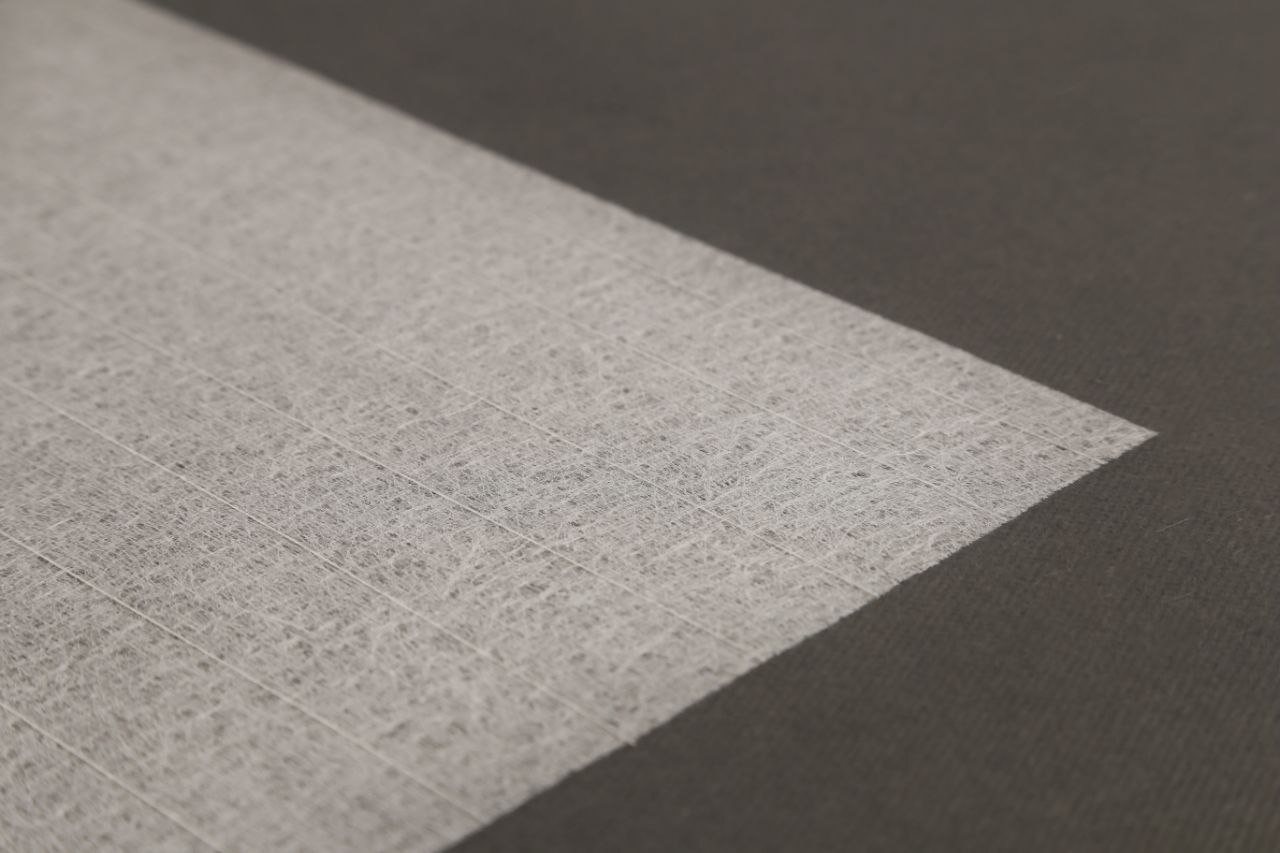
This material is made by stitching chopped fibers together. The fibers are arranged irregularly and at random, and the edges are bound with polyester yarn. Its principal properties include good moldability, more uniform thickness, better resin penetration between fibers, and effective reinforcement. It is compatible with polyester, vinyl ester, and epoxy resins.
Stitched mat is available in basis weights from 300 to 800 g/m² and widths from 10 to 300 cm.
Applications:
Pultrusion — Linear-Profile Industry: This is the largest and principal market for stitched mat. In pultrusion, fibers are drawn at speed and under high tension through a resin bath and a heated die to produce fiberglass profiles.
Structural fiberglass profiles: Manufacture of angle sections, channels, box sections, and composite bars. Conventional chopped strand mat tears under this high tension when its binder releases, whereas stitched mat withstands exceptional tension thanks to its yarn-stitched structure.
Vacuum Infusion and RTM Processes: In components where resin is drawn into the mold by vacuum, such as turbine blades or vehicle bodies, the binder in conventional mats obstructs smooth resin flow.
Large wind-turbine blades: Used because of the very high rate of resin penetration through stitched mat and the complete release of air bubbles.
Vehicle and high-speed-train body components: Creates completely uniform, bubble-free structures with high static strength against vibration.
Industrial Pipe Plants and Corrosion-Resistant Tanks (GRE/GRP):
Epoxy pipes and fittings (GRE): Conventional chopped strand mats have limited compatibility with epoxy resin because the epoxy does not readily dissolve their powder or emulsion binder. Because stitched mat contains no binder, it is the best choice for epoxy resins in high-pressure pipe manufacturing.
Tanks for highly aggressive chemicals: Eliminating chemical binder from the fiber structure prevents acidic substances from attacking the composite's internal reinforcement and greatly increases the tank's chemical resistance.
Luxury Marine and Shipbuilding Industries:
Premium recreational boat hulls: For components requiring fast lay-up, substantial thickness, and fiber flexibility over sharp mold angles without the fibers coming apart.
Technical Specifications:
Roll characteristics
Product code
Weight per Unit Area (g/m2)
Length (m)
Weight (kg)
Roll Width (mm)
ESM200
200
150
30
100_3000
ESM300
300
100
30
100_3000
ESM350
350
86
30
100_3000
ESM450
450
67
30
100_3000
ESM600
600
50
30
100_3000
ESM800
800
37.5
30
100_3000
Sizes are specified on the basis of a one-metre width.